Garage and shop floors sink at a joint, a corner or near a drain when the base underneath settles or washes out. If the slab is intact, we lift the low section back to level with polyurethane foam through small holes. A lifted floor can then be coated, so it ends up level and finished.
By Rob Diederich, owner · Updated
Good for
Settled joints & corners
Time on site
A few hours
Use it
Same day
Next step
Coat it after
The dropped panel is lifted flush at the joint, ready to use or coat. Drag the slider.
Where interior slabs sink
✓At control joints, where one panel drops below the next.
✓In corners and along walls, over backfill or poorly compacted base.
✓Around floor drains, where water has found its way under the slab.
✓In detached garages and shops built on a thin or uncompacted base.
Why they sink
Thin or loose base
Some slabs were poured on a thin or poorly compacted base. Gaps under the slab let it settle at joints and corners.
Fix: Foam fills the gaps and supports the slab across its whole footprint.
Water under the floor
Floor drains, leaking lines and water that gets in at the door soak the base under a garage or shop slab.
Fix: We lift the panel and seal the joints; leaks need fixing first.
Settling backfill
The soil pushed back against a new foundation is rarely compacted well. Anything sitting on it settles for years after the house is built.
Fix: Foam fills the voids and stiffens the zone under the slab without adding weight.
How we lift a garage floor, step by step
1Measure across the jointsWe check each panel against the ones that didn't move and look for drains, heavy equipment and anything stored on the low spot.
2Drill 5/8″ holesPenny-sized holes go through the slab a few feet apart, kept off the edges and corners where concrete is weakest.
3Inject and lift to the lineTwo liquids mix at the gun and go under the slab. The foam expands in seconds and fills the empty space first. Once the void is full, each short shot raises the slab a little. We move between holes so it rises evenly and stop at the line.
4Patch, seal or coatHoles are grouted flush. If a coating is next, the patches and joints are ground and filled so they disappear under it.
Illustrations, not to scale. Most residential jobs take a few hours, and you can walk on the slab when we pack up.
Why lift instead of replacing the floor?
Replacing a garage floor means emptying the garage, cutting and breaking out concrete indoors, and a week or more before you can park on it again. Lifting happens with the door open and your stuff pushed aside.
Fraction
of what tearing out and pouring new concrete costs
Same day
Walk on it when we pack up. Drive on it in hours, not a week.
No demo
No jackhammers, no dumpster, no torn-up lawn or landscaping.
5/8″ holes
Penny-sized and patched flush. No new slab that won't match.
Stays up
Foam adds almost no weight and doesn't wash out like soil.
Warranty
Written, and spelled out in your quote before you approve it.
Replace
tear out + pour
Demo
Base
Pour
Curing: no cars for about a week
Lift
foam, one visit
Done in a few hours. Use it the same day.
Day 1
Day 2
Day 3
Day 4
Day 5
Day 6
Day 7
Day 8
Day 9
Day 10
Replacement timing is typical; a contractor's schedule and the weather can stretch it. New-concrete cure times from Concrete Network.
Lift, then coat
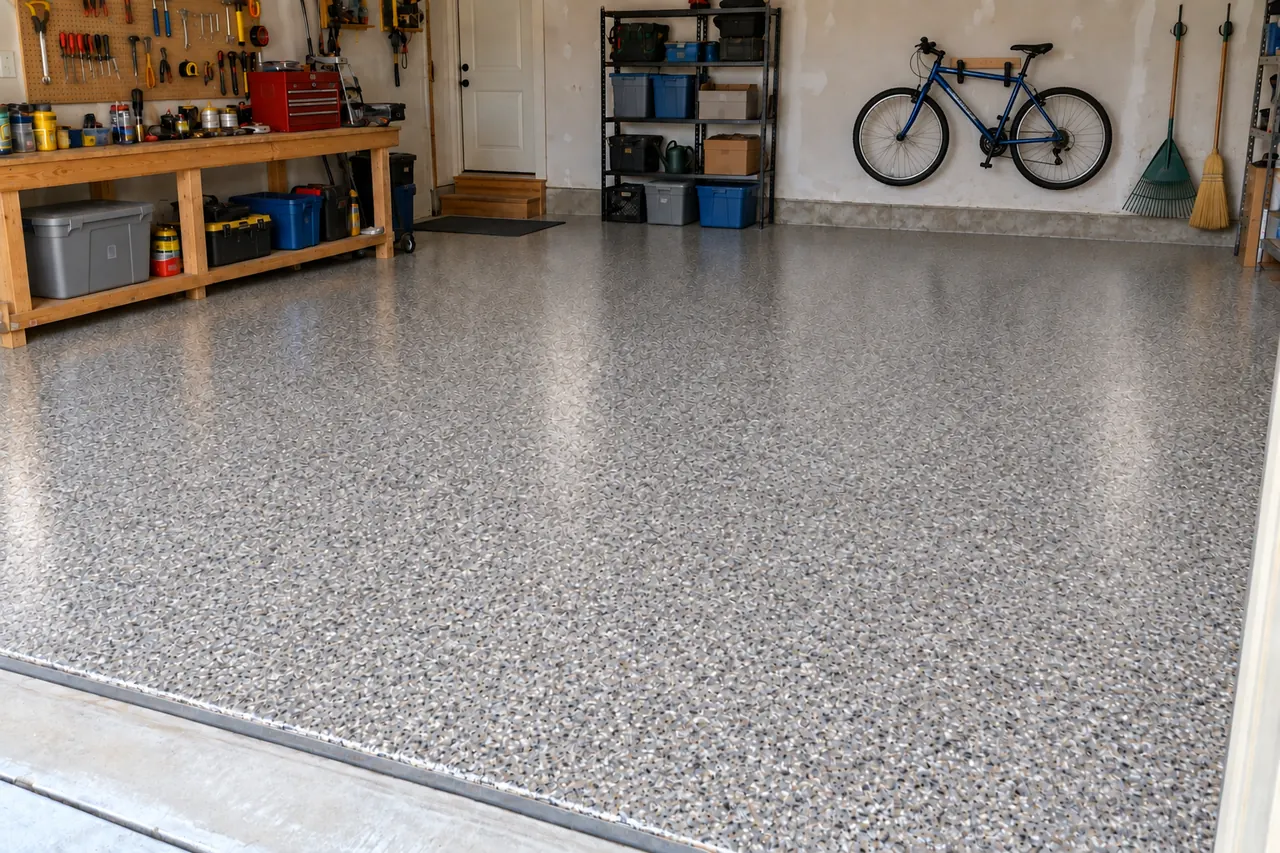
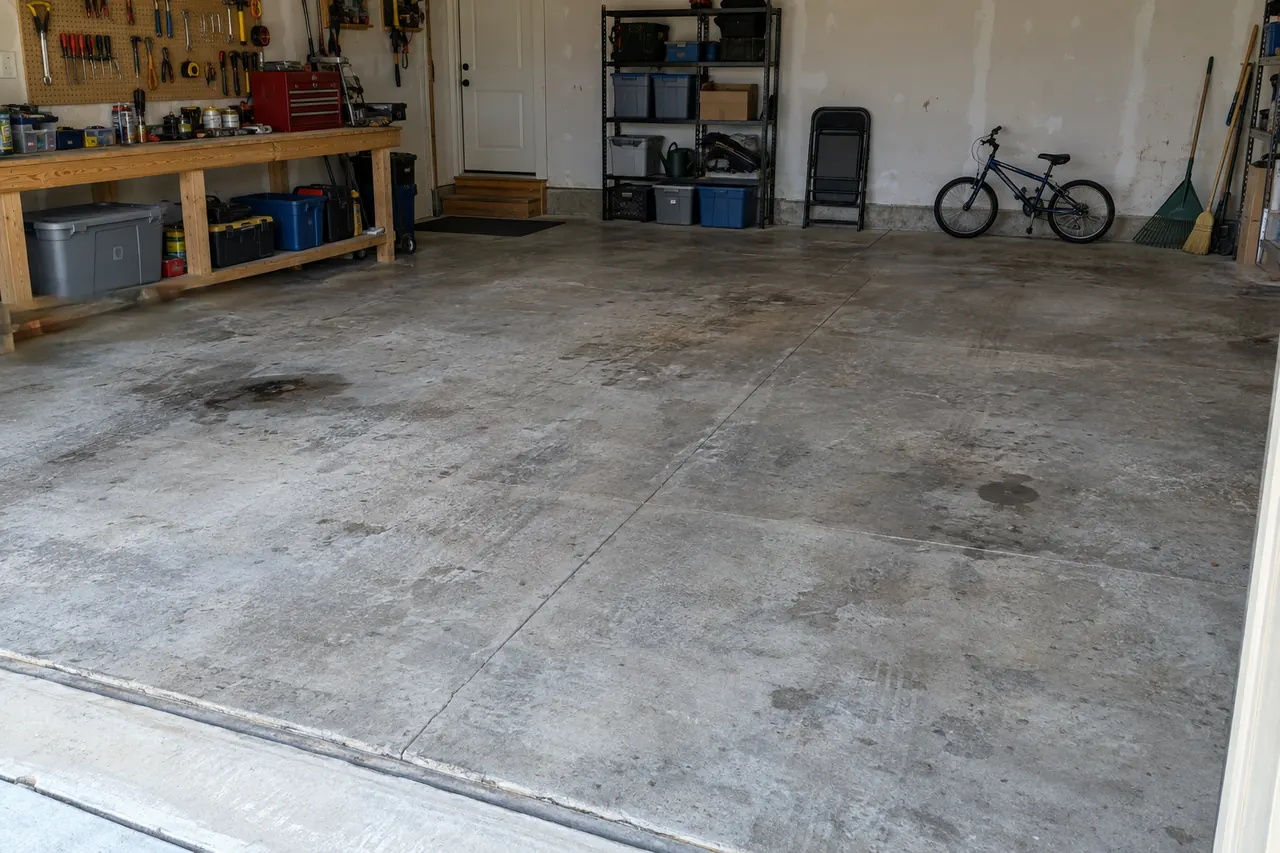
A level floor is the right start for a garage floor coating. We lift first, let it set, repair the joints and cracks, and the coating goes over it. The hole patches disappear under the coating.
Example
A stained, cracked garage floor, ground, repaired and coated with a full-broadcast flake system. Drag the slider. Example images, not a customer's job; photos from local jobs replace them as we finish them.
If something heavy sits on the low area (a lift, a gun safe, a stack of tires), let us know. Heavy loads need to be moved before lifting.
Your price, without a sales visit
Send three photos and a tape-measure shot. You'll get a firm price by text within 24 hours.
If the floor slab is intact or cracked into a few large pieces and it sank rather than heaved, yes. Foam lifts the low panels back in line with the rest of the floor, and cracks are repaired before any coating goes on.
Can you lift a garage floor and then coat it?
Yes, and that's the best order. We lift first, then grind, repair cracks and joints, and install the coating. The small injection holes are patched and covered by the coating.