
You notice it when the snow finally melts. A crack that was a pencil line last fall is now wide enough to grow weeds. The joint by the garage has a lip that catches the snowblower. And the apron at the street looks like it lost a fight with the plow.
Most driveway cracks aren't an emergency. But in northeast Wisconsin, water plus January is what turns small cracks into big ones. Here's how to figure out what you've got and what it needs.
Why Wisconsin Driveways Crack
All concrete cracks eventually. That's what the control joints (the straight grooves cut across the slab) are for: they give it a planned place to crack. The stuff that makes cracks worse is more local:
- Freeze-thaw. Water gets into a crack, freezes, expands, and pries the crack wider. We go through that cycle many times between November and April.
- Spring snowmelt. Snow piled along the driveway edge melts into the soil under the slab. Soft, wet soil lets slabs settle, and settled slabs crack and tip.
- Road salt and deicers. Salt doesn't cause cracks by itself, but deicers make freeze-thaw damage worse and speed up surface flaking and edge breakdown.
- Plows and snowblowers. A raised slab edge or a sealant bead left sticking up gets caught and chipped every winter.
- Downspouts and sump discharge dumping onto or next to the driveway, washing out the base.
Sort Your Crack in 60 Seconds
Grab a tape measure and a coin. Look at each crack and ask two questions: How wide is it? and Is one side higher than the other?
| Crack type | How to spot it | Right fix | DIY or pro? |
|---|---|---|---|
| Hairline | Thinner than a credit card, both sides level, not growing | Leave it, or seal it to keep water out | DIY |
| Open crack, level | You can slide a coin in, both sides even | Clean, backer rod if needed, flexible sealant | DIY |
| Control or expansion joint, open | The planned grooves or gaps, old filler missing or caulk failed | Clean out, backer rod, flexible sealant | DIY, or pro for long runs |
| Offset crack or joint | One side is lower, you can feel a lip with your toe | Lift the low slab level, then seal | Pro: lift + seal |
| Slab tipped toward garage or house | Water runs back toward the building | Lift to restore drainage, then seal the joints | Pro: lift + seal |
| Wide, crumbling, or spalled | Edges breaking off, chunks loose, surface flaking | Patch the damage or replace the section | Pro, usually a concrete contractor |
| Map cracking or broken into pieces | Spider-web cracks across a panel, or a slab in several loose chunks | Usually replacement of that section | Concrete contractor |
Not sure which one you've got? Our guide to concrete crack types goes deeper on what causes each.
Hairline Cracks: Usually Leave Them
Thin cracks with level sides are cosmetic in most cases. Concrete shrinks as it cures, and a few hairlines are normal, especially on a driveway that's a few years old.
You have two reasonable options:
- Leave it and watch it. Snap a photo with a coin for scale. If it looks the same next spring, it's fine.
- Seal it. If it's in a spot where water sits, a thin bead of flexible sealant keeps water from getting in. Hairlines usually don't need backer rod.
Don't skim concrete patch over it. A thin rigid layer tends to flake off within a winter or two.
If your driveway is less than a year or two old and already cracking, see why new concrete cracks.
Open Cracks and Joints: Flexible Sealant
This is the most common repair, and most homeowners can do it themselves. Cracks and joints that open and close with the seasons need a sealant that stretches with them.
The short version:
- 1Wait for the right weather. Most concrete sealants call for at least 40°F and a dry, frost-free surface. In Green Bay that's roughly late spring through early fall.
- 2Clean it out completely: old caulk, rotted filler strip, sand, weeds, dust.
- 3Push in closed-cell backer rod on anything about 1/4" wide or wider, so the sealant ends up about half as deep as the joint is wide.
- 4Fill with a flexible sealant rated for concrete joints and traffic. Self-leveling for flat joints, gun-grade for slopes.
- 5Leave it slightly below the surface so plows, shovels, and tires don't catch it.
- 6Keep cars off until the label says it's ready for traffic. That can be a few days, and longer in cool weather.
We cover sealant types and backer rod sizing in best concrete crack caulk, and cracks beyond the driveway in how to fix concrete cracks.
Thinking about mortar or a bag of patch instead? Picture a slab that shrinks every January and grows every July, with a hard plug wedged in the middle. The plug loses: it lets go along one side, or a new crack opens right next to it, and it can take a chip of slab edge with it.
Offset Cracks: It's a Settled Slab, Not a Crack Problem
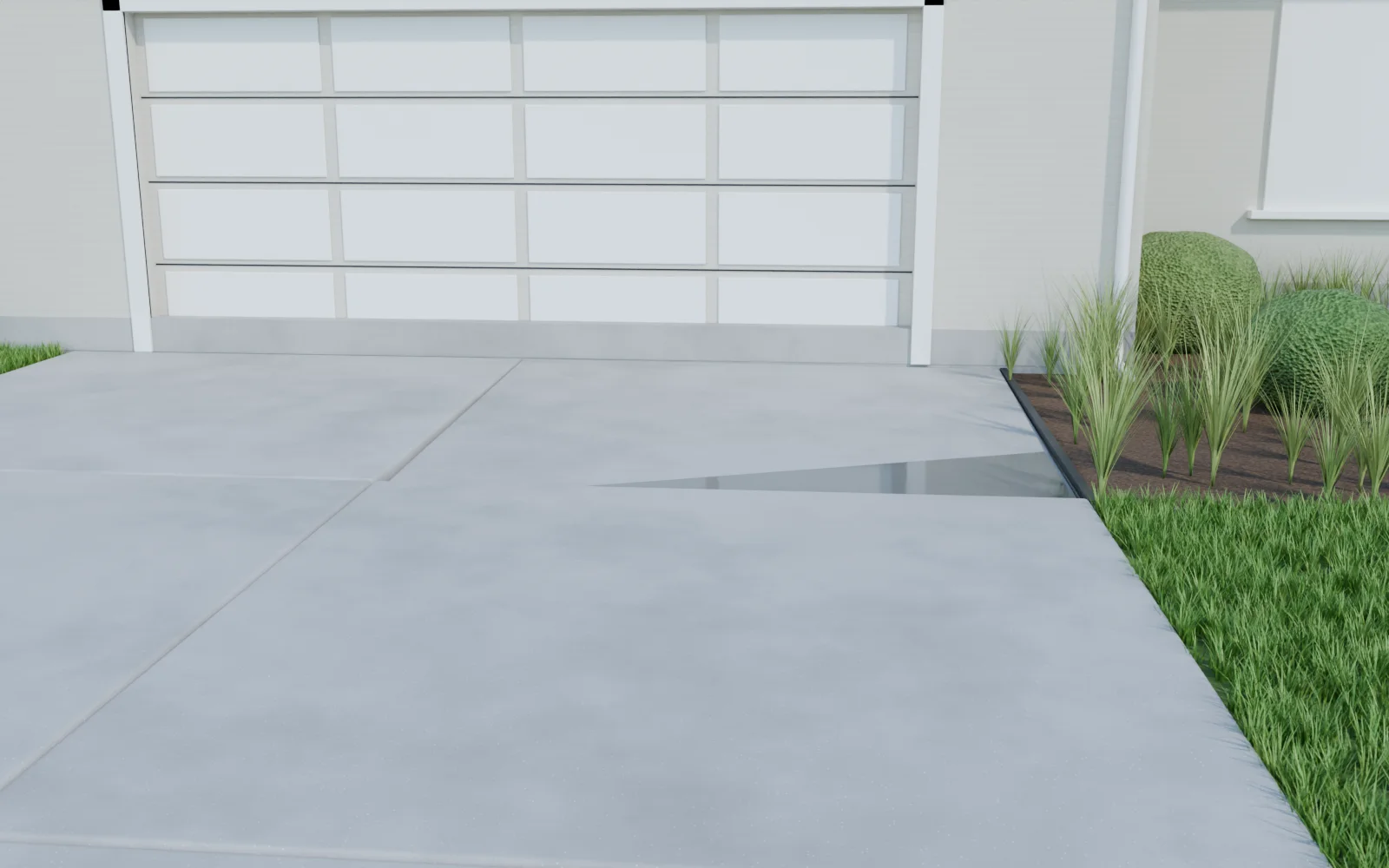
If one side of a crack or joint sits lower than the other, you're not looking at a crack problem. You're looking at a settled slab. The soil underneath compressed or washed out, and the slab dropped.
Caulking an offset crack leaves the trip edge, the void underneath, and the drainage problem in place, and the bead sits right where a plow blade can catch it.
The right order:
- 1Lift the low slab. We drill a few 5/8" holes (about the size of a dime) and inject high-density structural polyurethane foam. It fills the void under the slab, then raises it in small, controlled increments until it's level with its neighbor.
- 2Patch the holes.
- 3Seal the crack or joint now that both sides are even, so water stops getting under the slab and washing out the base again.
You can walk on it right away and drive on it the same day after the lift, then stay off the fresh sealant as long as its label says. That's why we usually do both in one visit: the lift fixes the position, and the sealing protects it.
Common spots for this on a Wisconsin driveway:
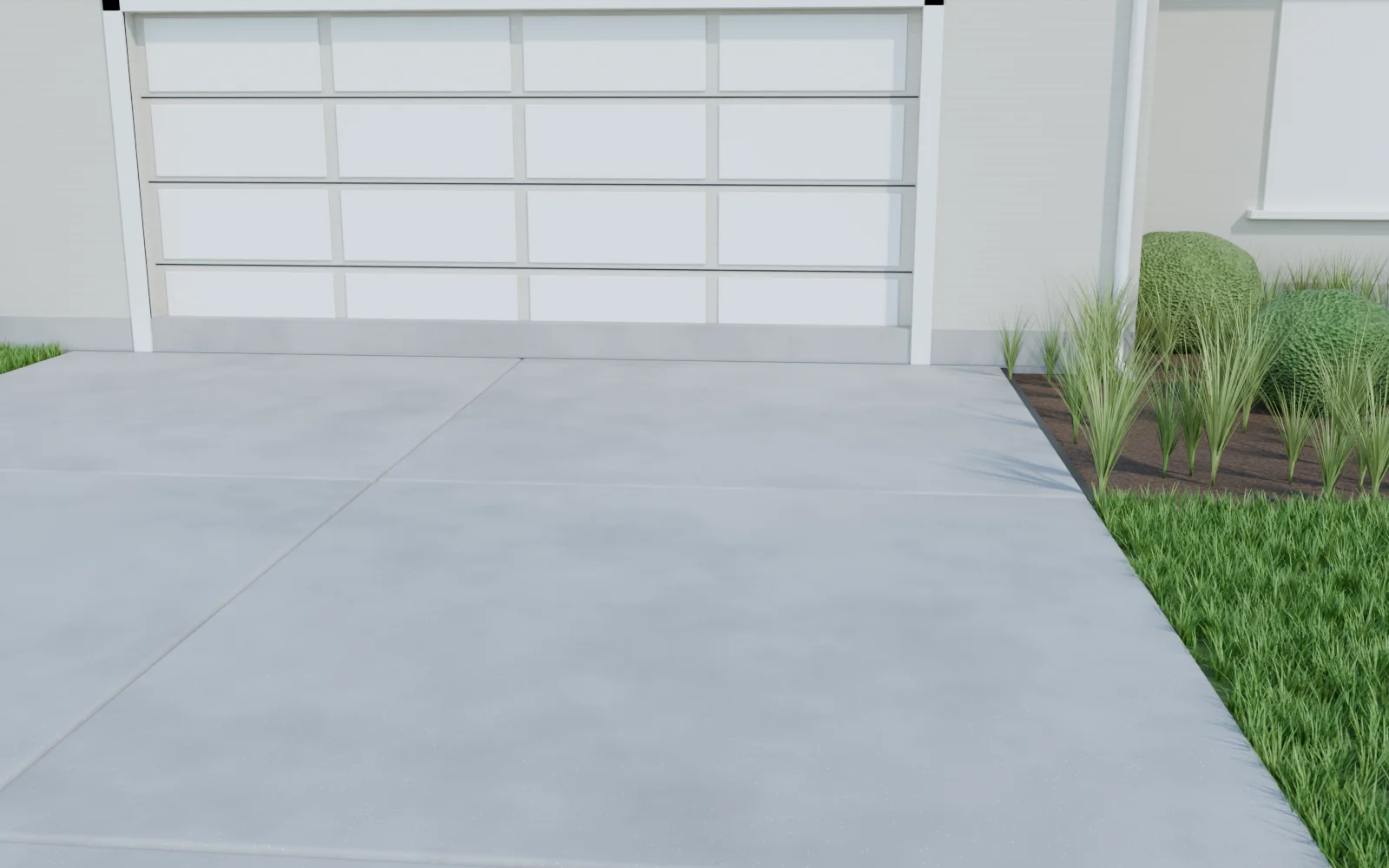
- The slab at the garage door, which often drops and tips back toward the garage
- The slab next to the house or front walk, sitting on loose foundation backfill
- Slabs near downspouts or where the sump discharges
- The last slab before the apron, where plows pile snow every winter
Learn more about how lifting works on our concrete lifting page.
Wide, Crumbling, or Broken Concrete: Patch or Replace
Some cracks are past the point of sealant or lifting. Be honest with yourself here:
- Edges crumbling or chunks breaking out. A sealant has nothing solid to stick to. A concrete contractor can patch spalled edges with a repair mortar made for that.
- Surface flaking off (scaling or spalling). That's a surface problem, not a crack problem. See concrete spalling causes.
- A slab broken into several loose pieces or covered in spider-web cracking. Lifting can raise a slab, but it can't glue a shattered one back together. That section usually needs replacing.
We don't do patching or replacement, and we'll tell you from the photos if that's what you need. If only one or two sections are shot and the rest have just settled, replacing the bad ones and lifting the rest can save a full tear-out. Our concrete replacement questions article can help you weigh it.
The Street Apron: Check Before Anyone Touches It
The apron (the section between the sidewalk or curb and the street) takes the worst of it: plow blades, salt spray, heavy trucks swinging wide, and runoff from the street.
Before you repair, lift, or replace it, check who controls it. In many communities the apron sits in the public right-of-way. In Green Bay, for example, the city treats aprons, sidewalks, and curbs as right-of-way, where work requires a permit from Public Works and resurfacing is limited to contractors licensed and bonded with the city. Other towns and villages have their own rules. One call to your public works department settles it.
Winter Habits That Keep Cracks From Coming Back
- Seal joints before winter, while it's still warm enough for the sealant to cure.
- Keep the sealant recessed so plows and snowblowers skate over it.
- Go easy on deicers. Never use ammonium nitrate or ammonium sulfate (sometimes found in fertilizers) as a deicer; concrete industry guidance warns they attack concrete fast. Skip deicers entirely the first winter on new concrete. Shovel early so you need less salt.
- Don't pile snow where it melts straight under a slab edge.
- Move downspouts and sump discharge away from the driveway.
- Walk your joints every spring. Reseal anything that's split or pulled away before it becomes a lifting job.