
The patio corner has been low for three summers. The front walk has had that lip since you moved in. Nobody's fallen. The basement's mostly dry. So why not leave it?
Sometimes that's the right call. But sunken concrete is one of those problems that doesn't send a bill all at once. It sends small ones, every spring, and some of them are bigger than the lift would have been.
Here's what waiting actually does, in numbers where we can give them and plain terms where we can't.
Why a Sunken Slab Rarely Holds Still
Concrete almost never sinks because it got heavy. It sinks because the soil under it left, compressed, or washed out, and in northeast Wisconsin water is behind most of it: downspouts, sump discharge, spring snowmelt soaking loose foundation backfill, and red clay that stays wet for weeks.
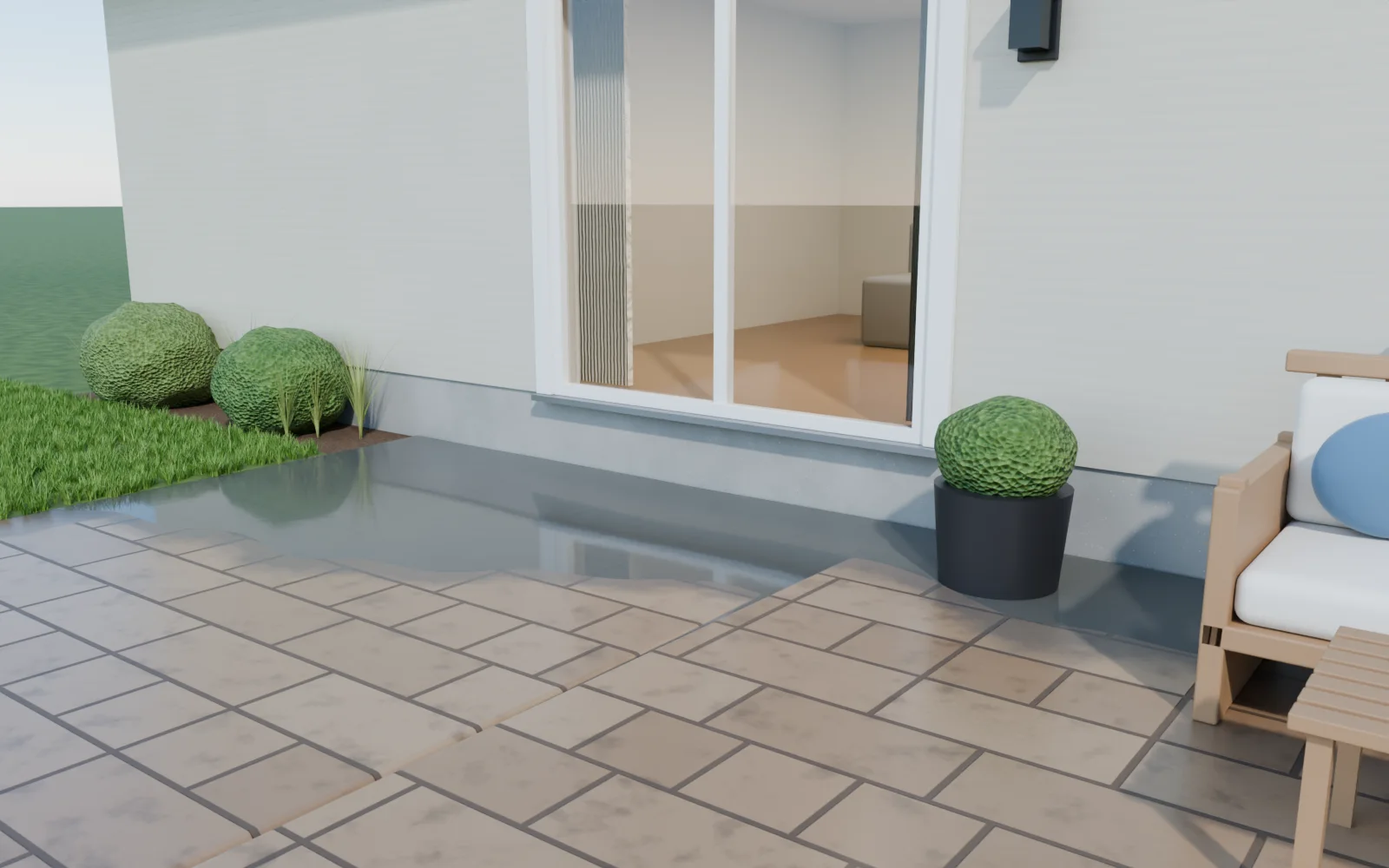
The catch is that a slab that has dropped is now a low spot, and low spots collect water. If it tipped toward the house, it now catches runoff and funnels it into the gap at the wall. The water that started the problem gets a better path to keep working. That's why so many sunken slabs look a little worse every May.
A Worked Example: One Patio, Five Springs
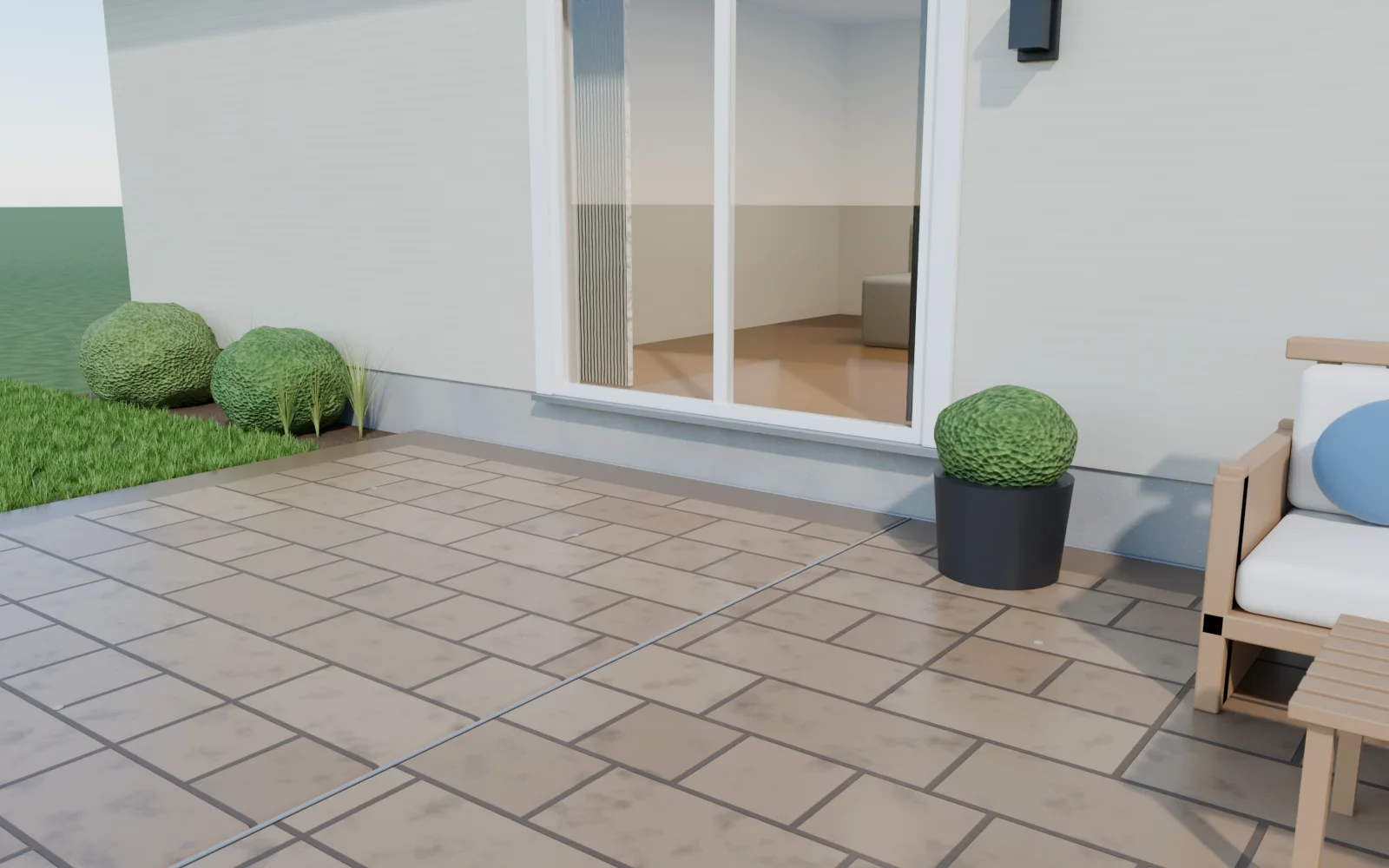
Take a 10-by-12-foot patio slab against the back of the house. When it was poured, it sloped away from the house by 2.5" over its 10-foot depth, a quarter inch per foot, which is about what the model building code asks for near a foundation.
Now the soil along the house has settled, and the edge against the wall has dropped 1". The outer edge hasn't moved. Bringing it back means filling a wedge-shaped space under the slab, deepest at the house.
To show how the math plays out, say a downspout at the corner keeps working on it and the house edge drops another half inch each spring. That rate is an assumption for illustration, not a prediction. Some slabs move faster, some barely move at all.
| Drop at the house edge | Slope away from the house | Space to fill under the slab | What you'd notice | |
|---|---|---|---|---|
| Today | 1" | 1.5" over 10 ft | About 5 cu ft | Drains slower than it used to |
| After 1 spring | 1.5" | 1" over 10 ft | About 7.5 cu ft | Puddles linger near the door |
| After 3 springs | 2.5" | Dead flat | About 12.5 cu ft | Water sits against the wall after every rain |
| After 5 springs | 3.5" | 1" toward the house | About 17.5 cu ft | Every rain runs at the foundation |
Two things jump out:
- The space to fill more than triples. Lifting price depends heavily on how much material goes under the slab and how far it has to move, so a deeper drop means a bigger job. Our guide to concrete lifting cost factors breaks that down.
- The slope flips. Somewhere around year three, that slab stops shedding water and starts holding it. After that, it's not just sinking. It's aiming water at your basement wall, which speeds up the sinking.
A lift at year zero fills about 5 cubic feet and restores the slope. A lift at year five fills more than three times that, and you may be drying out a basement corner on top of it.
The Trip-and-Fall Problem
A sunken panel on a walk or stoop is the kind of hazard people step on without seeing, especially at night or with snow on the ground.
In general terms, here's how Wisconsin looks at it. Property owners owe people who are lawfully on their property reasonable care, and claims often turn on whether the owner created the hazard, knew about it, or should have found it with a reasonable look. Wisconsin uses comparative negligence: under state law, an injured person can still recover as long as their own negligence wasn't greater than the owner's, with the award reduced by their share. "They should have watched where they were going" isn't the complete defense many people assume.
Homeowner's insurance usually includes liability coverage for this kind of thing, but a claim is still a hassle you'd rather not have. This isn't legal advice. If you have a specific worry, talk to your insurance agent or an attorney.
Sidewalks in Green Bay come with extra responsibilities. Property owners are responsible for maintaining the public sidewalk in front of their property. City Ordinance 34-14 also requires owners, renters, and anyone in charge of a property to clear snow and ice from the full width of the sidewalk within 24 hours after it falls. A sunken panel makes that harder, because it fills with meltwater after you shovel and refreezes overnight. Whether you or the city would answer for a fall on the public walk is a legal question with no one-line answer. Fixing a lip you already know about takes the question off the table.
Work on the public sidewalk is right-of-way work in Green Bay and needs a permit, so call the city before hiring anyone. Our uneven sidewalk guide covers how that works.
Water Aimed at Your Foundation
The soil right against your foundation is backfill, pushed in after the basement walls went up and often left loose. Slabs on top of it are the ones that tip back toward the house.
Once one does, three things happen together:
- Runoff lands on the slab and runs toward the wall instead of away.
- The gap between the slab and the wall opens up, and water pours straight down it into the loosest soil on the lot.
- That soil softens and settles more, so the slab tips further.
For new homes, the model building code calls for the ground to fall at least 6 inches within the first 10 feet of the foundation, and for paved surfaces within 10 feet to slope away at least 2 percent. A slab tipped the other way is working directly against that.
Chasing a wet basement corner costs far more than lifting a slab and sealing the joint. The order matters: lift the slab so it pitches away, then seal the gap at the wall. Details in caulking where concrete meets the house and soil grading around concrete.
Winter Turns a Low Spot Into an Ice Sheet
In Green Bay, the average overnight low is already below freezing in November and only creeps above it in April, with thaw days scattered through the months between. A sunken slab spends that whole stretch collecting water.
- Thaw-day melt refreezes overnight. Snow melting off the roof on a sunny afternoon runs into the low spot and becomes a sheet of ice by morning, often right where people walk.
- Ice pries joints and cracks open. Water expands about 9 percent when it freezes, so water sitting in an open joint or crack pushes it wider every cycle.
- The low spot gets the most salt. And salt on concrete that stays wet speeds up surface flaking. Calcium and magnesium chloride deicers can also react with concrete to form a compound that expands and does damage even above freezing. Lifting can't undo that kind of surface damage; see concrete spalling causes.
- The garage door freezes down. A sunken apron that holds water at the door seal is how you end up chipping the door free in January.
Every winter a slab spends low is a winter of extra wear on its surface, and that part doesn't come back when you lift it.
Cracks Under the Car
A driveway or apron slab with a void under it bends a little every time a tire rolls over the unsupported part. Concrete handles squeezing very well and bending poorly, so those cycles add up. The usual result is a crack that cuts off a corner where tires cross, then more cracks as the pieces lose support.
That's where waiting gets expensive fast. A slab with one crack can usually still be lifted and the crack sealed. A slab broken into several loose pieces usually can't, and then you're pricing replacement. Recent local cost data puts Green Bay-area driveway and patio replacement at roughly $8–$15 per square foot all-in, and new concrete poured on the same washed-out base can settle just like the old one did. Lifting typically costs a fraction of replacement, but only while the slab is still in good enough shape to lift.
A heavy one-time load, like a dumpster drop, a concrete truck, or a loaded trailer, can finish off a slab that's been bridging a void for years.
Selling Your Home With Sunken Concrete
Home inspectors look at it. Widely used home inspection standards include walkways, driveways, steps and stoops, patios, and the grading and drainage around the house where it could let moisture affect the structure. A trip edge on the front walk and a patio pitched toward the foundation are both easy, photographable findings.
Buyers negotiate with it. An inspection report is a buyer's list of things to ask you to fix or credit, and a vague note about drainage toward the foundation can sound scarier to a buyer than a few hundred square feet of concrete deserves.
Wisconsin sellers disclose it. Most Wisconsin home sellers fill out the state's Real Estate Condition Report, which asks about defects they're aware of, and its examples include significant problems with driveways, sidewalks, and patios, as well as grading problems. The form treats a defect as something that would significantly hurt the property's value, the health or safety of future occupants, or the life of the premises if it isn't fixed.
And the calendar works against spring sellers. We don't lift on frozen ground, so if you list in March, there may be no window to fix it before the buyer's inspector shows up. If a sale is likely in the next year or two, fix it the summer or fall before, and keep the before-and-after photos for the buyer.
Wait vs. Fix: What Changes Over 1, 3, and 5 Years
These are typical directions, not guarantees. A slab whose water source gets fixed may barely change. One with a downspout still dumping on it may change faster.
| Fix it this season | Wait 1 year | Wait 3 years | Wait 5 years | |
|---|---|---|---|---|
| Space to fill under the slab | Filled while it's small | Often a bit larger | Often noticeably larger | Can be several times the original |
| Slope near the house | Restored to drain away | May drain slower | May be flat | May slope toward the house |
| Trip edge | Gone | About the same or worse | Often worse | Often worse, plus new edges at neighboring joints |
| Surface condition | As it is today | One more winter of ice and salt in the low spot | Visible flaking more likely | Damage lifting can't fix |
| Cracking | Existing cracks only | Corner cracks possible under cars | More likely, especially on aprons | Broken slabs possible |
| Your options | Lift and seal | Lift and seal | Lift, if the slab's still in one or two pieces | Lift or replace, depending on cracking |
| Size of the job | Smallest | Somewhat bigger | Bigger | Bigger, or replacement |
When It's Honestly Fine to Wait
We'd rather you spend money on the slabs that need it.
- The lip is under 1/4" and off the main path. A backyard walk to the shed can sit.
- It isn't moving. If dated measurements and photos hold steady for a full year, there's no clock running.
- It still drains away from the house and nobody is tripping on it.
- It's winter. Nobody can lift on frozen ground. Send photos, plan it for spring, and salt the low spot lightly.
- It looks worst in March. That may be frost heave on a neighboring slab. Wait for the thaw and measure again; see frost heave vs. settling.
- You're replacing it within a year or two anyway. Don't lift a slab you're tearing out.
If you wait, wait smart. Extend the downspout that's feeding it (6 feet minimum, 10 is better), pack soil into washed-out edges, mark the lip with bright paint so people see it, and take a dated photo with a tape measure in the shot. Those steps slow the clock for almost nothing. Our guide to extending downspouts covers the details.